(CS-031) A Case Report – Post-surgical management of a pilonidal cyst excision utilizing weekly topical depilatory application.
Friday, April 28, 2023
7:15 PM - 8:30 PM East Coast USA Time
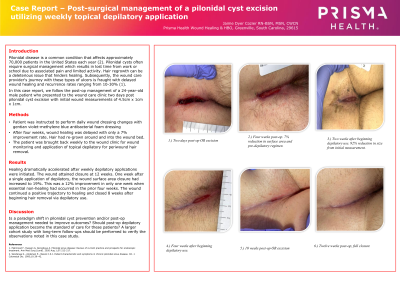
Introduction: Pilonidal disease is a common condition that affects approximately 70,000 many patients in the United States each year (2). The frequently required surgical management of pilonidal cysts result in time lost from work or school as it can cause pain and limit activity. Hair removal is often a deleterious issue that if not done will hinder healing of a pilonidal cyst. Subsequently, the wound care provider's journey is fraught with delayed wound healing and long-term recurrence rates ranging from 10-30% (1). In this case report, we follow the post-op management of a 24-year-old male patient who presented to the wound care clinic two days post pilonidal cyst excision. Initial wound measurements were 4.5cm x 1cm x 1cm.
Methods: Patient was instructed on daily wound changes with gentian violet- methylene blue antibacterial foam dressing. After four weeks of treatment, wound healing was found to be delayed with only a 7% improvement rate with gluteal cleft peri-wound hair seen to be growing into the wound bed. The patient was subsequently brought back to the wound clinic for weekly wound monitoring and application of topical depilatory for peri-wound hair removal.
Results: The pilonidal wound attained full closure at 12 weeks. Healing was dramatically accelerated after weekly depilatory applications were initiated. Percentage of wound closure before starting depilatory use was 7%. At his one week follow up after a single application of peri-wound depilatory for hair removal, wound surface area closure had increased to 19%; 12% improvement in one week after four weeks of essential non-healing. The wound continued a positive trajectory to healing and closed 8 weeks after beginning hair removal via depilatory.
Discussion: Is a paradigm shift in pilonidal cyst prevention and/or post-op management needed to improve outcomes? Should post-op depilatory application become the standard of care for these patients? A large cohort study with long-term follow-ups will be needed in the future to verify the observations noted in this case study.

.png)