(CS-043) 12 Month Retrospective Review of Pressure Injury Surgical Flap Techniques Involving the use of Pure Hypochlorous Acid (pHA) Preserved Wound Solution for Wound Bed Preparation
Friday, April 28, 2023
7:15 PM - 8:30 PM East Coast USA Time
Abigail Chaffin, MD – Associate Professor of Surgery, Chief of Section of Plastic and Reconstructive Surgery, Division of Plastic Surgery, Tulane School of Medicine
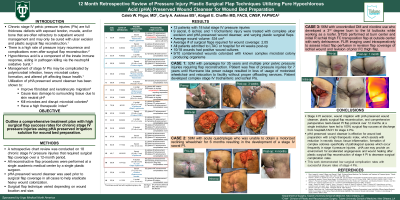
Introduction: Chronic stage 4 pelvic pressure injuries represent a difficult clinical challenge. These deep fibrotic injuries are often refractory to outpatient wound management, have underlying pelvic osteomyelitis, and surgical flap coverage may represent the only curative option1. However, the rate of pressure injury recurrence and complications after flap coverage remains high2. We share our experience with a comprehensive treatment plan—including wound irrigation with pure hypochlorous acid (pHA) preserved irrigation solution, operative techniques, and perioperative protocols—which led to excellent outcomes with high surgical flap success rates.
Methods: Data was collected by retrospective review of all stage 4 pressure injuries treated with surgical flaps at one academic hospital from January 1st, 2022 to December 31st, 2022. Operative techniques and perioperative protocols were examined. In addition, patients’ demographics, wound characteristics, and comorbidities were reviewed. Outcomes were assessed at discharge from inpatient or long term acute care hospital (LTACH) based on remaining deficits in wound coverage.
Results: 12 patients with 18 total stage 4 pressure injuries requiring surgical flap coverage were examined. 9 sacral, 8 ischial, and 1 trochanteric injury sites were treated with excision (18 of 18), ostectomy (15 of 18), and pHA preserved irrigation solution (18 of 18) before coverage. Following excision, the average wound volume was 534 cm3 (standard deviation 291 cm3). Gluteal flaps were the most common origin for coverage, with 15 gluteus muscle advancement flaps, 11 gluteal fasciocutaneous flaps, and 3 gluteal myocutaneous flaps used in the treatment of these injuries. In addition, 7 hamstring muscle advancement flaps were used. 12 of 18 injury sites were covered using multiple flaps. All patients remained admitted to either a hospital or LTACH for a minimum of 4 weeks after surgery with strict pressure offloading precautions. 1 of 18 injuries underwent reoperation for pelvic osteomyelitis recurrence. All patients healed from flap reconstruction without pressure injury recurrence.
Discussion: Pressure injury site excision, treatment with pHA preserved irrigation solution, and perioperative care steps may be similar among patients, but flap selection remained variable. pHA is effective for wound bed preparation, and high surgical success rates were seen with this team-based integrated protocol.

.png)