(CS-086) The Application of a Bioabsorbable Borate-Based Glass Wound Matrix for the Treatment of Chronic, Non-Healing Diabetic Foot Wounds, a Small Patient Cohort
Introduction: The use of a borate-based bioactive glass wound matrix in the setting of difficult to heal wounds in patients with type II diabetes mellitus has shown to be effective in decreasing healing times and facilitating wound closure. The use of this moldable wound technology is a novel approach to facilitate wound closure in these limb-threatening ulcerations. The use of a bioactive glass dressing facilitates cellular chemotaxis and proliferation. This supports cellular repair and regeneration in soft tissue defects.
Methods: The authors in this investigation provide their findings with the use of borate-based bioactive glass wound matrix in a small cohort of four patients. The patients have type II diabetes mellitus, peripheral arterial disease and peripheral neuropathy. These patients present with a wound with less than 50% of wound closure at four weeks duration. All patients failed conventional wound therapy consisting of sharp debridement, local wound care and offloading. All patients present with a HBA1C of less than 9.0% within three months prior to treatment and a wound size greater than one square centimeter. Two patients presented with end stage renal disease on hemodialysis.
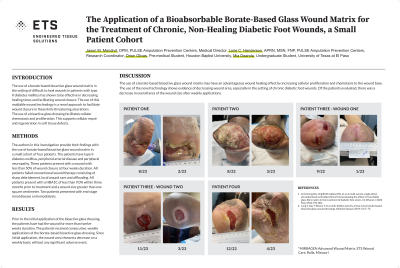
Results: Prior to the initial application of the bioactive glass dressing, the patients have had the wound for more than twelve weeks duration. The patients received consecutive, weekly applications of the borate-based bioactive glass dressing. Since initial application, the wound area showed a decrease on a weekly basis, without any significant adverse event.
Discussion: The use of a borate-based bioactive glass wound matrix may have an advantageous wound healing effect by increasing cellular proliferation and chemotaxis to the wound base. The use of the novel technology shows evidence of decreasing wound area, especially in the setting of chronic diabetic foot wounds. Of the patients evaluated, there was a decrease in overall area of the wound size after weekly applications.

.png)