(CS-093) Utilizing pure Hypochlorous Acid (pHA) Preserved Wound Cleanser and Bioresorbable Silver Matrix to Preserve Orthopedic Hardware in Patients with a Non-Infected Surgical Wound Dehiscence.
Friday, April 28, 2023
7:15 PM - 8:30 PM East Coast USA Time
Introduction: Surgical wound dehiscence with exposed hardware following orthopedic implantation is not that uncommon, affecting up to 16.1% of patients, and can be devastating and difficult to treat (Hehr, 2020). The most conventional way to manage patients with wounds that contain hardware includes irrigation and debridement, intravenous antibiotics, and removal of the hardware (Meaike, 2016). These interventions can drive up the cost of healthcare not to mention significantly increase the patient’s morbidity and mortality (Hehr, 2020).
The current common consensus of the literature states that salvage rates are better when “the duration of infection or the duration of hardware exposure has been less than 2 weeks” (Hehr, 2020). In most cases, the hardware is explanted, because of the concern of biofilm formation and decrease in antibiotic susceptibility. The goal of these case presentations is to suggest that wound closure with hardware retention is possible without the presence of infection.
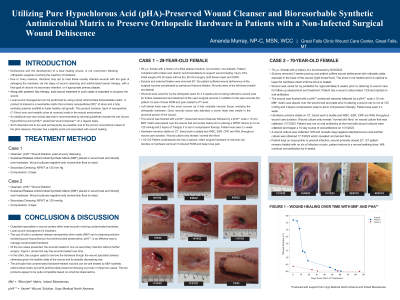
Methods: Patients selected in this case series had dehisced surgical wounds with exposed orthopedic hardware. Both patients selected in this series were treated in the outpatient wound care setting with pHA wound cleanser and Bioresorbable silver matrix under negative pressure.
Results: One patient achieved 98% wound closure before electing to undergo hardware explantation due to pain and reduced range of motion.
The second patient achieved 75% granulation tissue formation over the hardware and continues to receive wound care biweekly. Both patients had stable hardware and blood work that was WNL.
Discussion: The decision for hardware explanation versus salvage is multifactorial and involves variables such as presence of infection, duration of infection, duration of hardware exposure, presence of hardware loosening, hardware location, pain, and reduced range of motion (Hehr, 2020). Treatment utilizing pHA as a versatile wound cleanser and Bioresorbable silver matrix used directly on the hardware, as an extended antimicrobial that reduces bioburden and formation of biofilm, has been proven to promote wound closure even in the presence of exposed hardware and should be considered as a viable treatment option.

.png)