(CS-097) Observations on the use of Fish Skin Graft (FSG) for the rapid coverage of exposed bone with granulation tissue in Mohs Micrographic Surgical Wounds of the Scalp
Friday, April 28, 2023
7:15 PM - 8:30 PM East Coast USA Time
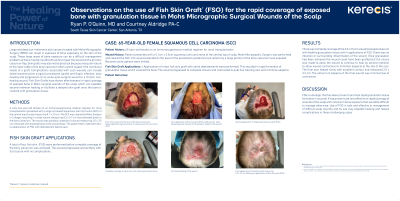
Introduction: Large and deep non-melanoma skin cancers treated with Mohs Micrographic Surgery (MMS) can result in exposure of bone especially on the skin of the scalp. These large areas of bone exposure can be a difficult management problem as there may be insufficient laxity to repair the wound with a primary closure or flap. Skin grafts may also not be practical because avascular nature of the outer table of the bony calvarium often cannot support the nutritional needs of a graft. Complications associated with such wounds can include failed reconstructive surgical procedures (grafts and flaps), infection, slow healing and progression of an acute post-surgical wound to a chronic non-healing wound. Fish Skin Grafts have shown effectiveness in rapid coverage of exposed bone in Mohs surgical wounds of the scalp which can expedite second-intention healing or facilitate a delayed skin graft once the bone is covered with granulation tissue.
Methods: A sixty-five-year-old female on an immunosuppressive medical regimen for renal transplantation presented with a large untreated Squamous Cell Carcinoma (SCC) of the central top of scalp measuring 5.1 x 3.5 cm. The SCC was cleared by Mohs Surgery in 2 stages resulting in a wide wound measuring 8.3 x 5.7 cm that extended down to the bony calvarium. The wound was partially closed but a wound measuring 3.0 x 3.5 cm remained with exposed bone at the wound base. The patient then underwent four (4) applications of FSG with debridement before each.
Results: There was complete coverage of the 3.0 x 3.5 cm area of exposed calvarium with healthy granulation tissue with 4 applications of FSG. There was no infection or surrounding inflammation of the wound. Once granulation had been achieved the wound could have been grafted but the choice was made to allow the wound to continue to heal by second intention to allow wound contracture to minimize alopecia at the site of the scar. The final scar healed nicely with excellent contour and measured 2.5 x 3.2 cm.
Discussion: FSG is a biologic that has been proven to promote rapid granulation tissue formation in wounds. It has proven to be very effective in rapid coverage of wounds of the scalp with calvarium bone exposure that would be difficult to manage otherwise. Use of FSG is safe and effective in management of difficult scalp wounds and its use may expedite healing and reduce complications in these challenging cases.

.png)