(CS-098) Use of Hypochlorous Acid Solution to Cleanse Chronic Wounds
Friday, April 28, 2023
7:15 PM - 8:30 PM East Coast USA Time
Christina del Pin, M.D. – Attending Physician, Surgery, Northwell Health; Marisa Ranire-Maguire, M.D. – Attending Physician, Surgery, Northwell Health; Kane Genser, M.D. – Wound Care Fellow, Surgery, Northwell Health; Julie Isgro, N.P. – Nurse Practitioner, Wound Care, Surgery, Northwell Health
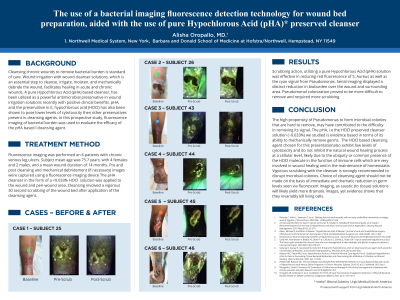
Introduction: Cleansing chronic wounds to remove bacterial burden is standard of care. Wound irrigation with wound cleanser solutions, which is an essential step to cleanse, irrigate, moisten, and mechanically debride the wound, facilitates healing in acute and chronic wounds. Hypochlorous acid (HOCl), has been utilized as a powerful antimicrobial preservative in wound irrigation solutions recently with positive clinical benefits. HOCl has also been shown to poses lower levels of cytotoxicity then other cleansing agents. In this prospective study, fluorescence imaging of bacterial burden was used to evaluate the efficacy of HOCl cleansing agent.
Methods: Fluorescence imaging was performed on 6 patients with chronic venous leg ulcers. Subject mean age 75.7 years, with 4 females and 2 males, and a mean wound duration of 14 months. Pre and post cleansing and mechanical debridement (if necessary) images were captured using a fluorescence imaging device1. < 0.033% HOCl2 solution was applied to the wound and peri-wound area. Cleansing involved a vigorous 30 second scrubbing of the wound bed after application of the cleansing agent.
Results: Scrubbing utilizing HOCl acid solution was effective in reducing red fluorescence of S. Aureus as well as the cyan signal from Pseudomonas. Serial imaging displayed a distinct reduction in bioburden over the wound and surrounding area. Pseudomonal colonization proved to be more difficult to remove and required more scrubbing.
Discussion: The high propensity of Pseudomonas to form biofilms may have contributed to the difficulty in removing its signal. HOCl preserved cleanser solution (~0.033%) is a strong oxidant. HOCl cleansing agents also exhibit low levels of cytotoxicity and do not inhibit the natural wound healing process at a cellular level. Vigorous scrubbing with the cleanser is strongly recommended to disrupt biofilm. Choice of cleansing agent should not be made on the basis of immediate and dramatic reduction in germ levels seen via fluorescent imaging, as caustic (to tissue) solutions will likely yield more dramatic images, yet evidence shows that they invariably kill living cells.

.png)