(CS-109) Hyperbaric Oxygen Therapy to Improve Common Sequela for Uncommon Cancer
Friday, April 28, 2023
7:15 PM - 8:30 PM East Coast USA Time
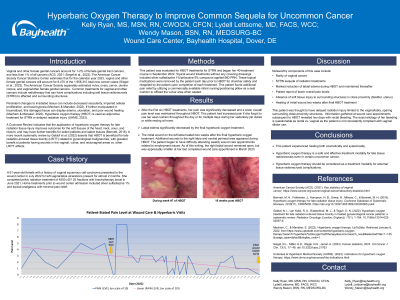
Introduction: Persistent changes to irradiated tissue can include decreased vascularity, impaired cellular proliferation, and local hypoxia. If further manipulated or traumatized, this damaged tissue can display edema, ulceration, and poor wound healing. Hyperbaric oxygen therapy (HBOT)is used as adjunctive treatment for soft tissue radionecrosis (STRN) or late radiation-induced tissue toxicity (LRITT). A 61-year-old female with a history of vaginal squamous cell carcinoma presented to the wound center in July 2022 for left vagina/labia ulcerations present for almost 2 months. She completed pelvic radiation treatment of 4500 cGY 25 fractions with brachytherapy boost in June 2021. Home treatments included silver sulfadiazine 1% and topical analgesics with minimal pain relief.
Methods: She was evaluated for HBOT treatments for STRN and began her 40 treatment course in September 2022. She was treated with a silver sulfadiazine 1% /prilocaine 5% compound applied BID PRN.
Results: Her overall pain level decreased throughout HBOT and her initial wound healed two weeks after completing HBOT.
Discussion: This case is significant regarding the infrequency of vaginal cancer as the etiology needing radiation and subsequent STRN sequela; marked reduction in labial edema experienced by the patient; and the absence of soft tissue injury to close proximity surrounding structures of bladder, uterus, or rectum. Hyperbaric oxygen therapy (HBOT) can have positive wound healing results when used as adjunctive treatment for wounds related to soft tissue radionecrosis (STRN).

.png)