(DLS-009) Combination of Advanced Wound Care Modalities for an Infected, High-Risk Patient: Case Study
Friday, April 28, 2023
7:15 PM - 8:30 PM East Coast USA Time
Kevin Liberty, DPM, MHSA – Podiatrist
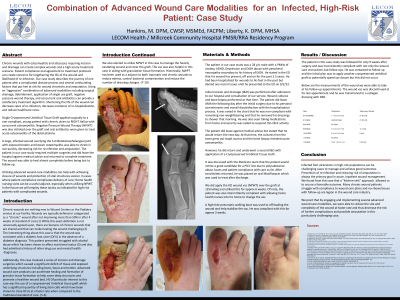
Introduction: Chronic wounds with osteomyelitis and abscesses requiring incision and drainage can create complex wounds and a high acuity treatment scenario. Patient compliance and agreement to treatment protocols can create concerns for lengthening the life of the wound and likelihood of re-infection. Our case study describes the journey of one patient with a complicated disease process and several confounding factors that put him at risk for wound chronicity and amputation. Using an “aggressive” combination of advanced modalities including surgical drainage, debridement, application of single use graft, negative pressure wound therapy, and concurrent oral antibiotics can provide a satisfactory treatment algorithm. Shortening the life of the wound can decrease rates of re-infection, decrease incidence of re-hospitalization, and health care costs can be demonstrated.
Methods: Single Cryopreserved Umbilical Tissue Graft applied surgically to a non-compliant, young patient with chronic ulcers to RIGHT Hallux with concurrent osteomyelitis. NPWT was also initiated over the graft and oral antibiotics were given to treat acute osteomyelitis of the distal phalanx.
Results: A large, infected wound overlying the 1st Metatarsophalangeal joint with exposed tendon and known osteomyelitis was able to shrink in size quickly, decreasing risk for re-infection and amputation. The patient in our case study required multiple surgeries and did leave the hospital against medical advice and returned to complete treatment. The wound was able to heal almost completely before being lost to follow-up.
Discussion: Utilizing advanced wound-care modalities can help with achieving closure of wounds and protection of vital structures sooner. In cases where patient compliance complicates delivery of care; Home health nursing, especially with NPWT, can be a useful adjunct. In the future we will employ these tactics as indicated for high-risk patients with complicated wounds.

.png)