(CS-129) The Use of an Autologous Multilayered Leukocyte, Platelet and Fibrin Patch in Diabetic Limb Salvage
Friday, April 28, 2023
7:15 PM - 8:30 PM East Coast USA Time
Introduction: Diabetic foot ulcers are a common wound frequently seen in wound centers and podiatrist offices. These wounds lead to infection, amputation, and unfortunately death if not treated correctly. Research has found that at least 60% of nontraumatic lower limb amputations are due to diabetic foot ulcers. Interventions to help heal these wounds before they become infected and lead to an amputation are constantly being developed. This study looked at multiple patients at risk of amputation and the use of an autologous multilayered leukocyte, platelet, and fibrin(LPF) patch.
Methods: The study presents several patients who failed to progress in a timely repair sequence during conventional wound care despite weekly sharp debridement, local wound care, and offloading as indicated. Other advanced wound products had been tried and failed. All patients presented with type 2 diabetes. Investigators measured and analyzed wounds weekly.
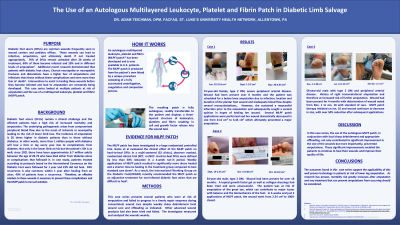
Results: One patient with severe peripheral arterial disease was initially scheduled to undergo a below knee amputation due to inadequate blood flow, infection, location and duration of her plantar foot wound. However, she suffered a heart attack before the amputation was performed and subsequently sought a second opinion in hopes of healing her wound. Multilayered LPF patches were applied and dramatically decreased the size of her wound from 19.8 cm2 to 6.44 cm2 in five weeks and ultimately prevented a major amputation. The second patient, whose wound had been present for over a year and a half, was also at risk for an amputation, this time of the great toe, which can cause major issues with balance and biomechanics of the foot. In six weeks and just four applications of the autologous LPF patch, the wound went from 2.24 cm2 to 100% closed. The third patient’s sub fifth metatarsal wound measured 5 cm2 prior to application of LPF patch in the operating room after debridement. After just two LPF patch applications, the wound was 100% closed.
Discussion: In this case series, the use of the autologous patch, in conjunction with local sharp debridement and appropriate offloading, contributed to significant improvement in not only the size of the wound but more importantly, prevented amputations. These significant improvements enabled the patients to continue to heal their wounds and improve their quality of life.

.png)