(CS-134) Plasma / Nitric Oxide Therapy of Both Acute and Chronic Wounds Occurring in Radiated Tissue
Friday, April 28, 2023
7:15 PM - 8:30 PM East Coast USA Time
Jessica Baker, RN – Institute for Advanced Wound Care; lyudmila Nikolaychook, DO – Institute for Advanced Wound Care; angela Pickens, RN – Institute for Advanced Wound Care
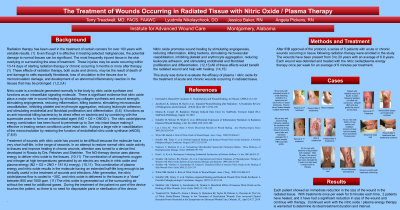
Introduction: Radiation therapy has been used in the treatment of certain cancers for over 100 years with variable results. (1) Even though it is effective in treating selected malignancies, the potential damage to normal tissues can be significant. The most frequently injured tissue is the skin overlying or surrounding the area of treatment. These injuries may be acute occurring within 10-14 days of starting radiation therapy or chronic occurring 3 months or more after therapy. (1) These effects of radiation therapy, both acute and chronic, may be the result of death of and damage to cells especially fibroblasts, loss of circulation to the tissues due to microcirculation damage, and development of an abnormal inflammatory reaction in the tissues that may be prolonged. (1,2,3,4) The use of nitric oxide/plasma energy has been found to be beneficial in treating these difficult wounds. The nitric oxide is generated from the surrounding air with the nitric oxide molecules being attached to a plasma energy stream stabilizing the molecule so that it can be delivered to the tissues with good therapeutic effect. This nitric oxide/plasma energy stream will penetrate intact skin up to 3 cm. During the treatment, no part of the device touches the patient so there is no need for disposable parts or sterilization of the device.
Nitric oxide promotes wound healing by stimulating angiogenesis, reducing inflammation, killing bacteria, stimulating microvascular vasodilatation, inhibiting platelet and erythrocyte aggregation, reducing leukocyte adhesion, and stimulating endothelial and fibroblast proliferation and differentiation. (5,6) All of these effects would benefit the radiated wound and help with healing. (7,8)
Methods: We have treated a series of 5 patients with wounds resulting from radiation therapy. The wounds have been present from 6 weeks to 20 years with an average of 8.7 years. Each was treated with the nitric oxide/plasma energy therapy once per week for an average of 6 minutes per treatment.
Results: Each patient showed immediate reduction in size of the wound and have showed continuous healing. 3 patients have healed and 2 continue in therapy with significant reduction in size of the wound. Final healing will be presented.
Discussion: The use of nitric oxide/plasma energy therapy has been shown to be effective in treating very difficult to heal acute and chronic wounds in radiated tissue. Further experience with this new technology and therapy should be pursued to confirm these results.

.png)