(CS-045) The Use of a Synthetic Self-Assembling Peptide Matrix in a Limb Salvage Setting
Friday, April 28, 2023
7:15 PM - 8:30 PM East Coast USA Time
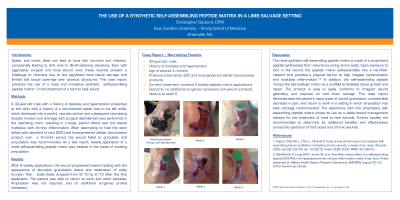
Introduction: Spider and insect bites can lead to local skin necrosis and infection, occasionally leading to limb and/or life threatening situations. Even with aggressive surgical and local wound care, these wounds present a challenge to clinicians due to the significant local tissue damage and limited soft tissue coverage over osseous structures. This case report presents the use of a novel and innovative synthetic self-assembling peptide matrix in the treatment of a hard to heal wound.
Methods: A 32 year old male with a history of diabetes and hypertension presented to the clinic with a history of a documented spider bite to his left ankle, leaving a painful, necrotic eschar and leading to necrotizing fasciitis. Incision and drainage with surgical debridement was performed in the operating room, resulting in a large, painful defect over the lateral malleolus with chronic inflammation. After attempting to heal the open defect with standard of care and bio-engineered cellular tissue based product over a 4-month period, the wound failed to granulate and amputation was recommended. As a last resort, weekly application of a novel self-assembling peptide matrix was initiated in the hopes avoiding amputation.
Results: After 4 weekly applications, the wound progressed toward healing with the appearance of abundant granulation tissues and restoration of ankle function. Pain scale levels dropped from 9/10 to 2/10 after the first application. The patient was able to return to work and other activities. No additional surgeries were necessary.
Discussion: The novel synthetic self-assembling peptide matrix is made of a proprietary peptide synthesized from natural occurring amino acids. Upon exposure to ions in the wound, the peptide matrix self-assembles into a nanofiber network that provides a physical barrier to help mitigate contamination and modulate inflammation. In addition, the self-assembling peptide mimics the extracellular matrix as a scaffold to facilitate tissue growth and repair. The product is easy to apply, conforms to irregular wound geometry, and requires no cold chain storage. This case report demonstrates the patient's rapid onset of wound granulation, considerable decrease in pain and return to work in a setting in which amputation had been strongly recommended. The experience with this proprietary self-assembling peptide matrix shows its use as a viable wound management solution for the treatment of hard to heal wounds. Further studies are recommended to determine its additional benefits and effectiveness in both acute and chronic wounds.

.png)