(CS-071) The Use Of Pressurized Cyclic Topical Oxygen Therapy* Can Be Used To Facilitate And Maintain Wound Closure In Diabetics With Peripheral Arterial Disease And Osteomyelitis
Friday, April 28, 2023
7:15 PM - 8:30 PM East Coast USA Time
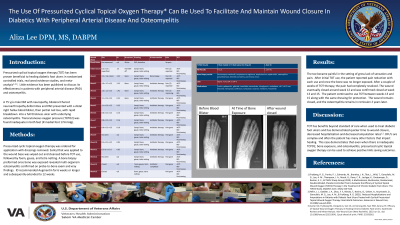
Introduction: Pressurized cyclic topical oxygen therapy (TOT) has been proven beneficial to healing diabetic foot ulcers in randomized controlled trials, real word evidence studies, and meta-analysis1,2,3. Little evidence has been published to discuss its effectiveness in patients with peripheral arterial disease (PAD) and osteomyelitis.
A 75 y/o male DM with neuropathy, bilateral charcot neuroaropathy deformities and PAD presented with a distal right hallux blood blister, then nail loss which then quickly broke down into a full thickness ulcer with underlying osteomyelitis. Transcutaneous oxygen pressure (TCPO2) was found inadequate in both feet.
Methods: Pressurized cyclic topical oxygen therapy was ordered for application without dressing on. Santyl to the wound base (wiped out and cleansed before TOT use) followed by foam, gauze, tetra netting. Bone biopsy preformed once bone was exposed and revealed multi-organism osteomyelitis confirmed on probe-to-bone exam and xray findings. ID recommended Augmentin for 6 weeks or longer, and was extended to 12 weeks by infectious disease doctor.
Results: The toe became painful in the beginning in the setting of gross lack of sensation and pain. After initial TOT use, the patient reported pain reduction with each use and once the bone was no longer exposed, after a couple of weeks of TOT therapy, the pain had completely ceased. The wound eventually closed around week 12 and was confirmed closed at week 13 and 15. The patient continued to use the oxygen therapy between weeks 13 and 15 along with the same dressing for protection. The wound remains closed, and the osteomyelitis remains in remission 2 years later.
Discussion: TOT has benefits beyond standard of care when used to treat diabetic foot ulcers. It has demonstrated quicker time to wound closure, decrease in hospitalization and decreased amputation rate when used1,2. DFU’s are complex and often the patient has many other factors that impact healing. This case demonstrates that even when there is inadequate TCPO2, there is bone exposure, and osteomyelitis pressurized cyclic topical oxygen therapy can be used to achieve positive limb saving outcomes.

.png)