(CS-147(GR-002)) Expediting Acute Wound Healing by Integrating Multiple Therapeutic Strategies: A Case Series
Friday, April 28, 2023
2:15 PM - 3:15 PM East Coast USA Time
Emily Alberto, MD – Surgical Resident, Surgical Critical Care, Christiana Care; John Getchell, RN – Research Coordinator, Trauma Research, Christiana Care; Luis Cardenas, DO, PhD – Acute Surgical Wound Service Medical Director, Surgical Critical Care, Christiana Care; Jessie Powell, APRN-FNP-C – Acute Surgical Wound Service NP, Surgical Critical Care, Christiana Care
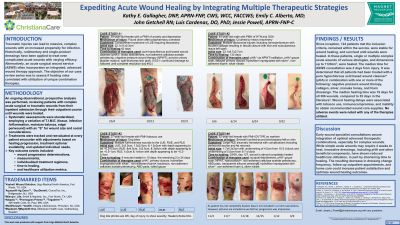
Introduction: Historically, rudimentary and single-product dressings have been applied to treat even complicated acute surgical wounds with varying efficacy. Alternatively, an acute surgical wound service (ASWS) often incorporates an integrated, advanced wound therapy approach. The objective of our case review series was to assess if healing rates were correlated with utilization of unique combination therapies.
Methods: An ongoing observational, prospective analysis was performed, reviewing patients with complex acute surgical or traumatic wounds from their inpatient admission through their outpatient course until wounds were healed. Systematic assessments were standardized employing a variation of T.I.M.E. (tissue, infection /inflammation, moisture balance, edge/periwound) with “S” for wound size and social considerations at every patient encounter. Key outcome events included wound progression determinations, measurements, tracking individualized treatment regimens, time to healing, and healthcare utilization metrics.
Results: Since inception, 124 patients met the inclusion criteria, remained within the service, were stable for wound healing, and survived until wounds were healed. In these patients, single or multiple complex acute wounds of various etiologies, and dimensions up to 1120cm3, were healed. The median time for ASWS consultation was 2 days from injury. It was determined that all patients had been treated with a pure hypochlorous acid based wound cleanser* (pHA) in combination with one or more of the following: negative pressure wound therapy, collagen, silver, manuka honey, and foam dressings. The median healing time was 19 days for all 366 wounds. Wound healing delays were associated with tobacco use, immunocompromise, and inability to obtain recommended wound care supplies.
Discussion: Early wound specialist consultations assure integration of optimal advanced therapeutic combinations, especially for complex wounds. While simple acute wounds may require 4 weeks to heal, innovative dressings, including pHA and other beneficial components, have shown reduced healthcare utilization, in part by shortening time to healing. The resulting decrease in dressing change frequency, follow-up outpatient appointments, and home care could increase patient satisfaction and optimize wound healing outcomes.

.png)