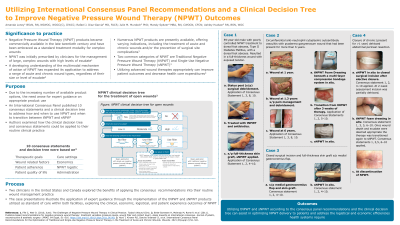
(CS-116) Utilizing International Consensus Panel Recommendations and a Clinical Decision Tree to improve Negative Pressure Wound Therapy (NPWT) Outcomes
Introduction: Numerous Negative Pressure Wound Therapy (NPWT) products have been made commercially available in the last thirty years. These products offer varying indications, including the treatment of acute and chronic wounds and/or the prevention of surgical site complications. Two common categories of NPWT are Traditional Negative Pressure Wound Therapy (tNPWT) and Single-Use Negative Pressure Wound Therapy (sNPWT).
Due to the increasing number of available product options, the need arose for expert guidance on appropriate product use. Consensus Panel Recommendations for the Optimization of Traditional and Single-use Negative Pressure Wound Therapy in the Treatment of Acute and Chronic Wounds published ten consensus statements and a clinical decision tree to address how and when to use NPWT and when to transition between tNPWT and sNPWT1.
Methods: To demonstrate the applicability of the consensus panel recommendations and clinical decision tree, two clinicians in the United States and Canada explored the benefits of implementing these recommendations into their routine wound management practice. Case presentations illustrate the application of expert guidance through the implementation of the tNPWT and sNPWT products* utilized as standard of care within both facilities. The case studies explore the clinical, economic, logistical, and patient experience outcomes of NPWT.
Results: Utilizing tNPWT and sNPWT according to the consensus panel recommendations and the clinical decision tree can assist in optimizing NPWT delivery to patients and address the logistical and economic efficiencies health systems require.
Discussion: In addition to providing optimal clinical outcomes to patients, clinicians must also consider and support the patient’s quality of life and enable efficiencies within their healthcare system. The Consensus Panel developed the clinical decision tree to help clinicians apply the right device type to patients at the right time and encourage regular wound evaluation for device transition. The case presentations illustrate the application of the international consensus panel recommendations across various levels of care and care settings. By doing so, clinicians can provide the clinical and patient factors necessary for optimizing NPWT delivery to patients while addressing the logistical and economic efficiencies health systems require.

.png)