(CS-001) Minimally Invasive Surgery for the Management of Osteomyelitis in the Lower Extremity by use of a Bone Harvester: A Case Series
Friday, April 28, 2023
7:15 PM - 8:30 PM East Coast USA Time
Breana Marine, DPM; Jasmine Shelford, DPM; Will Stallings, BS; Lady DeJesus, DPM, FACFAS, CWSP
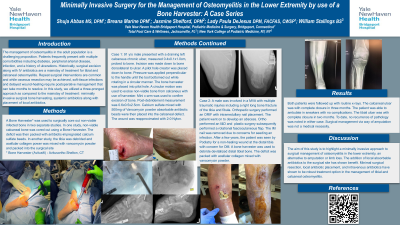
Introduction: The management of osteomyelitis in the adult population is a challenging proposition. Patients frequently present with multiple comorbidities including diabetes, peripheral arterial disease, infection, and a history of ulcerations. Historically, surgical excision along with intravenous antibiotics are a mainstay of treatment for tibial and calcaneal osteomyelitis. Repeat surgical interventions are common and while osseous resection may be achieved, soft-tissue infections and delayed wound-healing require postoperative management that can take months to resolve. In this study, we utilized a three-pronged approach as compared to the mainstay of treatment: minimally invasive surgical bone harvesting, systemic antibiotics along with local antibiotic placement.
Methods: A Bone Harverster* was used to surgically core out non-viable infected bone in two separate studies. In one study, the tibia was debrided and acellular collagen power was mixed with vancomycin powder and packed into the surgical site. In another study, non-viable calcaneal bone was cored out using a Bone Harvester until healthy, cancellous bone was appreciated. The deficit was then packed with antibiotic-impregnated calcium sulfate beads.
Results: Both patients were followed up in an outpatient clinic with routine x-rays. Wound healing in calcaneal osteomyelitis took three months. The patient was able to ambulate in sneakers with complete wound closure. Wound healing in tibial osteomyelitis took about two months at which point staples were removed and complete wound healing was noted. To date, no reoccurrence of deformity was noted in either case.
Discussion: The aim of this study is to highlight a minimally invasive approach to surgical management of osteomyelitis in the lower extremity. The addition of local absorbable antibiotics to the surgical site has shown benefit. Minimal surgical resection, local antibiotic placement, and intravenous antibiotics have shown to be robust treatment option in the management of tibial and calcaneal osteomyelitis.

.png)