(CS-002) Limb Preservation and Restored Functionality Utilizing a Human Keratin Hydrogel Matrix* Wound Covering for Diabetic Chronic Ulcerations
Friday, April 28, 2023
7:15 PM - 8:30 PM East Coast USA Time
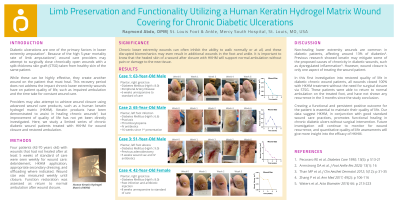
Introduction: Diabetic high-risk patients with ulceration of the foot frequently have multiple issues requiring intensive treatment to prevent further co-morbidity such as limb loss. Health care professionals face many challenges as they outline a strategic path for healing. The primary goal is to obtain wound closure, and much of the existing data on skin substitute products focuses on this outcome. However, restoration of a functional lower limb is also critical to positive patient outcomes and quality of life. Here, we investigated the ability of a human keratin hydrogel matrix (HKHM*) to close diabetic lower extremity ulcerations and restore limb function.
Methods: This is a retrospective review of four patients ranging from the ages of 42 to 70 years old with challenging chronic lower extremity diabetic ulcerations. All patients were treated with HKHM* on a weekly basis. The treatment protocol included debridement and application of secondary dressings along with appropriate offloading. Measurements and photographs were taken in order to assess wound healing rates and closure. Function was assessed as return to normal ambulation on the wounded foot.
Results: All patients had complex diabetic chronic ulcerations of the foot. The individuals’ comorbidities further complicated the potential outcomes. All four patients achieved 100% closure of their respective complex diabetic wounds with HKHM* without having to endure a split thickness skin graft for complete closure. Additionally, no recurrence has been observed in the four weeks since the conclusion of the case series. A functional foot was maintained in all patients, allowing mobility and thus leading to a higher quality of life.
Discussion: Health care professionals have many choices in treating complicated patients in limb preservation. HKHM* is a novel technology that separates itself from other wound matrices available as the first human keratin wound covering for treatment of diabetic ulcerations. Obtaining wound closure from a complicated wound is gratifying for the patient and health care professional, particularly in cases where severe comorbidities have previously impeded healing. Creating a functional outcome for the patient is essential in order to maintain quality of life. These results suggest HKHM* may be an effective treatment option in chronic complicated diabetic wounds.

.png)