(CS-006) Negative Pressure Wound Therapy with Instillation and Dwell Using New Novel Foam Dressing of Infected Wounds
Friday, April 28, 2023
7:15 PM - 8:30 PM East Coast USA Time
Introduction: NPWT with instillation + dwell has been used to remove slough/exudate from infected wound beds. Previously, a reticulated foam dressing was used in conjunction with a separate thin and/or thick foam in the wound bed. There is a new novel foam that fuses both the reticulated and solid foam pieces together to improve ease of use and time.
Methods: Digital photo documentation
Non-contact real time fluorescence wound imaging for bacterial presence + location
Non-contact near infrared spectroscopy studies of wound measurement of deoxyhemoglobin, oxyhemoglobin, and ratio of tissue oxygenation (StO2)
NPWT with instillation + dwell and Hypochlorous acid
hybrid novel silicone-acrylic drape
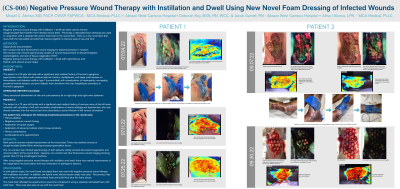
Results: PATIENT 1
The patient is a 50 year old male with a significant past medical history of Fournier's gangrene, hypertension, HFrEF, dyslipidemia, ESRD on hemodialysis and DM type 1 (uncontrolled) with complications of nephropathy, neuropathy, peripheral arterial disease and prior diabetic foot ulcerations who was hospitalized secondary to Fournier's gangrene. The patient underwent the following surgery:
06/24/2022
Sharp excisional debridement of skin and subcutaneous fat on right thigh and right lower abdomen
PATIENT 2
The patient is a 70 year old female with a significant past medical history of varicose veins of the left lower extremity with ulceration of left calf, secondary lymphedema of venous etiology and hypertension who was directly admitted from the wound care clinic secondary to acute infection of left venous ulcerations .
he patient has undergone the following treatments/procedures in the recent past:
- Venous ablation
- negative pressure wound therapy
- application of topical oxygen
- application of advanced cellular and/or tissue products -
- venous compression
- lymphedema clinic appointments
Both patients showed marked improvement of the wound bed. There was marked removal of slough/exudate showing increased granulation tissue. Patient 1 was discharged to a skilled nursing facility and was lost to follow up. Patient 2 was discharged to home and is being followed at the wound care clinic for application of cellular and/or tissue products.
Discussion: Both cases, the novel fused reticulated + solid foam was used with the npwt with instillation + dwell. This was in lieu of using the separate reticulated foam and solid foam pieces.
The novel foam afforded the opportunity to save time compared to using a separate reticulated foam with solid foam. There was also ease of use with the novel foam.

.png)