(CS-010) The Use of a 3D Electrospun Synthetic Polymer Matrix (3DESPM) for Limb Salvage for Hard to Heal Chronic Ulcers.
Friday, April 28, 2023
7:15 PM - 8:30 PM East Coast USA Time
Introduction: Over 150,000 lower extremity amputations are performed in the United States each year, with 85% of lower-limb amputations in patients with diabetes, being preceded with an unhealed foot ulcer. This incidence is directly proportional to rates of peripheral arterial occlusive disease, neuropathy, and soft tissue/bone infection.
Compounding challenges with diabetes mellitus, which is present in 82% of all vascular-related lower extremity amputations in the United States, have an astounding 30 times greater lifetime risk of amputation when compared to patients without diabetes mellitus. In addition, of persons with diabetes who have a lower extremity amputation, up to 55% will require amputation of the second leg within 2‐3 years [5]. While we have seen a decline in the number of amputations performed annually in, we must continue to strive to dramatically decrease amputation statistics.
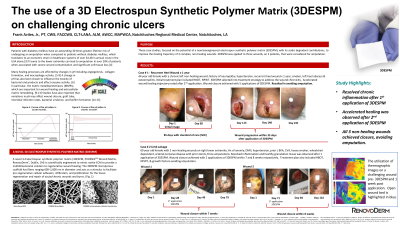
Methods: This case series, focused on the potential of a bioengineered electrospun synthetic polymer matrix (3DESPM) to improve the healing trajectory of 7 complex non-healing wounds facing amputation.
Electrospun synthetic polymer matrix was applied to seven wounds (2 patients) that were considered for amputation. As a limb salvage measure, each patient received multiple 3DESPM applications.
Results: All 7 wounds achieved closure avoiding amputation.
Discussion: In this case series, limb salvage was achieved in 7 complex wounds. The morphology of 3DESPM mimics native hemodynamic ECM to encourage cellular adhesion, infiltration, and proliferation. Comprised of two naturally resorbable synthetic polymers, Polyglycolide or polyglycolic acid (PGA) and poly(L-lactide-co-caprolactone) (PLCL), 3DESPM naturally degrades via hydrolysis, into α-hydroxy acids and fatty acids to support tissue homeostasis and restore the body’s natural wound healing process.

.png)