(CS-028) Cellular Tissue Piscine Graft Utilized in Resolution of APR Surgical Wound Failed VRAM Flap in Radiated Field
Friday, April 28, 2023
7:15 PM - 8:30 PM East Coast USA Time
Introduction: Surgical full thickness wounds dehiscence in perineal region can be difficult to heal for a multitude of reasons. In literature review Abdominal Perineal Resection (APR) morbidity in relation to healing and wound complications irrespective of surgical approach varies from 14-80%. [1,2] Delayed wound healing risk factors include but are not limited to, obesity, smoking, smoking history, APR procedural bleeding, pre-operative chemotherapy, pre-operative radiotherapy, immune suppression, hypoalbuminemia.[3] Pre procedural chemoradiotherapy account for the highest APR morbidity risks association for healing complications. Chemoradiotherapy is associated with tissue atrophy, fibrosis, and lymphatic disruption of the healing cascade.
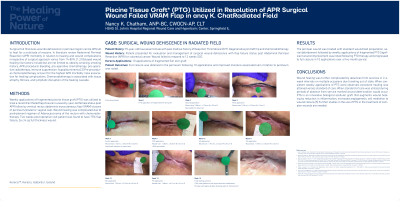
Methods: Weekly application of cellar tissue piscine graft (CTPG) was utilized to treat a recalcitrant failed flap closure in a seventy-year-old female status post APR follow by vertical rectus abdominis myocutaneous flap (VRAM) closure of perineum/posterior vaginal wall. Wound healing was complicated due to pretreatment regimen of Adenocarcinoma of the rectum with chemoradiotherapy. Two weeks post operative visit patient was found to have 75% flap failure, 26 cm sq full thickness wound.
Results:
The perineal wound was treated with standard wound bed preparation, serial debridement followed by weekly applications of CTPG. Significant wound improvement was noted following CTPG therapy and progressed to full closure in 10 applications over a five-month period.
Discussion: Wound healing was further complicated by absences from services in 2-4-week intervals on multiple occasions due traveling out of state. When consistent weekly applications of CTPG were observed consistent healing was attained verses standard of care. When standard of care was utilized during periods of absence from service marked wound deterioration would occur. CTPG is an innovative biological acellular graft that augments wound healing by reduction in inflammation, increased angiogenesis, cell mediation to wound closure.[5] Further studies in the use of CTPG in the treatment of complex wounds are needed.

.png)