(CS-033) Innovative compression treatment with controlled pressure may improve patient self-care and reduce the number of hospital visits
Friday, April 28, 2023
7:15 PM - 8:30 PM East Coast USA Time
Charlotta Arrhenius, Nurse – S2Clinic; Andreas Nilsson, Ph.D. – PressCise AB
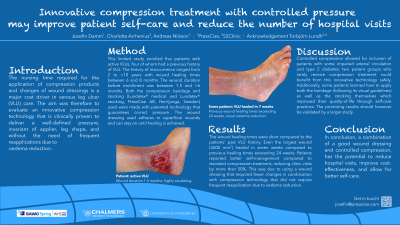
Introduction: Nursing time required for application of compression products and changes of wound-dressings is a major cost driver in venous leg ulcer (VLU) care. The aim was therefore to evaluate an innovative compression technology. The products (bandage* and stocking**) are clinically proven to deliver a well-defined pressure, invariant of applier, leg shape, without frequent reapplications due to oedema reduction.
Methods: Five patients with active VLUs, of which four had a previous history of VLU, were enrolled in this limited study. The history of the reoccurrence ranged from 2 to >10 years, with wound healing time of 6 to 8 months. The wound duration before enrollment, was between 1.5 and >6 months. Both the compression bandages and stockings used, were made with a patented technology that guarantees the correct pressure. The wound dressing used adheres to superficial wounds, and can stay on until healing is achieved.
Results: The wound healing times were short compared to the patients’ past VLU history. Even the largest wound, 3600 mm2, healed in 7 weeks, compared to previous wound healing times exceeding 24 weeks. The patients reported better self-management compared to standard compression treatment. It was estimated that the number of visits to the clinic was reduced by more than 50%, due to the choice of a wound dressing that required less dressing changes, in combination with the compression technology that did not require frequent refitting due to oedema reduction.
Discussion: Patients with some impaired arterial circulation and type 2 diabetes could be included due to the controlled compression. Hence, the innovative technology allows for a safe treatment for two patients groups that rarely receives compression treatment.
Additionally, some of the patients and their relatives learned how to apply the products (both the bandage following its visual guidelines, and the stocking). Self-care is an important factor when it comes to quality of life. The promising results in this study should be validated by a larger study.
In conclusion, a combination of a good wound dressing and controlled compression has the potential to reduce the number of hospital visits, improve cost-effectiveness and allow for better self-care.

.png)