(CS-035) Use of A Novel Dressing Combining Negative Pressure Wound Therapy With Instillation and a Reticulated Open Cell Foam with Silicone Hybrid Drape in Complex Wounds
Friday, April 28, 2023
7:15 PM - 8:30 PM East Coast USA Time
Krista Bauer, RN, WCC, OMS; Kari Day, RN, BSN, WCC; Ashley Wardman, CPPM, Surgical LPN-C
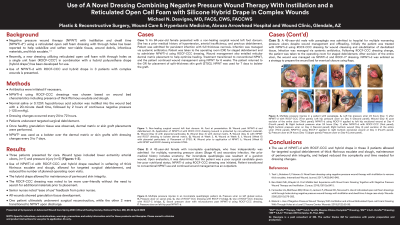
Introduction: Negative pressure wound therapy (NPWT) with instillation and dwell time (NPWTi-d*) using a reticulated open cell foam dressing with through holes has been reported to help solubilize and soften non-viable tissue, wound debris, infectious materials, and thick exudate.1-4 Recently, a new dressing utilizing reticulated open cell foam with through holes as a single unit foam (ROCF-CCC†) in combination with a hybrid polyurethane drape (hybrid drape§) has been developed for use. Use of NPWTi-d with ROCF-CCC and hybrid drape in 3 patients with complex wounds is presented.
Methods: Antibiotics were initiated if necessary. NPWTi-d using ROCF-CCC dressings was chosen based on wound bed characteristics including presence of thick fibrinous exudate and slough. Normal saline or 0.125% hypochlorous acid solution was instilled into the wound bed with a 20-minute dwell time, followed by 2 hours of continuous negative pressure. Dressing changes occurred every 24 to 72 hours. Patients underwent targeted surgical debridement. Once healthy granulation tissue was observed, dermal matrix or skin graft placements were performed. NPWT‡ was used as a bolster over the dermal matrix or skin grafts with dressing changes every 3 to 7 days.
Results: Three patients presented for care. Wound types included lower extremity arterial ulcers, (n=1) and pressure injury (n=2). Use of NPWTi-d with ROCF-CCC and hybrid drape resulted in softening of thick fibrinous exudate and slough, allowed for targeted surgical debridement, and reduced the number of planned operating room visits. The hybrid drape allowed for maintenance of periwound skin integrity. The ROCF-CCC dressing was noted to be more user friendly without the need to search for additional materials prior to placement. Senior nurses noted “ease of use” feedback from junior nurses. All wounds showed granulation tissue development. One patient ultimately underwent surgical reconstruction, while the other 2 were transitioned to NPWT upon discharge.
Discussion: The use of NPWTi-d with ROCF-CCC and hybrid drape in these 3 patients allowed for targeted surgical debridement of thick fibrinous exudate and slough, maintenance of periwound skin integrity, and helped reduced the complexity and time needed for dressing changes.

.png)