(CS-047) Can a fiber with antimicrobial silver barrier, that is also adherent to sloughy, necrotic tissue be made into a dressing that cleanses wounds? A case series putting theory into practice.
Friday, April 28, 2023
7:15 PM - 8:30 PM East Coast USA Time
Introduction: : Removal of necrotic material is essential for a wound to heal, and this can be achieved in many ways. One of the ways that could work in theory is the use of a dressing that is preferentially adherent to necrotic tissue due to the material properties inherent in the dressing. A novel technology has indeed been developed to allow the removal of wound debris, without needing recourse to sharp debridement. This technique, in theory, may be most suitable for wounds that are very painful and hard to sharply debride. We present a case series of some of the first patients in the USA who have been treated with this novel dressing.
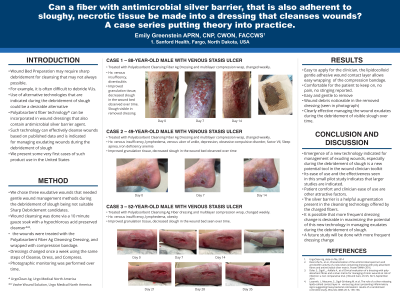
Methods: For this case series, we chose a convenience sample of 4 patients, each of whose chronic wounds were treated with the new fiber dressing for up to 6 weeks, demonstrated the presence of necrotic tissue on the wounds, and were not suitable candidates for sharp debridement. We applied the dressings post cleansing with soap and water, and a 10 minute soak of hypochlorous acid solution. In some of the cases a multilayer venous compression wrap was used. We captured via serial imaging the elimination of necrotic tissue and wound healing.
Results: The cleansing results are immediately apparent from the serial imaging in the demonstrated cases. The patients found the dressings to be comfortable and the clinicians found them easy to use with and without compression. The silver in the dressing worked in keeping these wounds free of infection.
Discussion: Though US based RCTS are indicated, our limited case series shows that the theory of creating dressings with fibers that due to their chemical structure, stick to necrotic tissue, can improve removal of debris, and promote wound healing.

.png)