(CS-048) Negative Pressure Wound Therapy With Instillation and a Hybrid Drape Use in a Small Case Series
Friday, April 28, 2023
7:15 PM - 8:30 PM East Coast USA Time
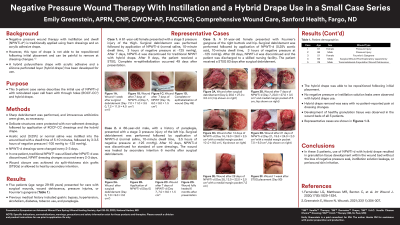
Introduction: Negative pressure wound therapy with instillation and dwell (NPWTi-d*) is traditionally applied using foam dressings and an acrylic adhesive drape. However, this type of drape is not able to be repositioned following initial placement and can be painful to remove at dressing changes.1,2 A hybrid polyurethane drape with acrylic adhesive and a silicone perforated layer (hybrid drape†) has been developed for use. This 5-patient case series describes the initial use of NPWTi-d and hybrid drape.
Methods: Five patients presented for care. Sharp debridement was performed, and intravenous antibiotics were given, as necessary. Delicate structures were protected with non-adherent dressings followed by application of NPWTi-d dressings and the hybrid drape. Acetic acid (0.25%) or normal saline was instilled into the wound bed with a dwell time of 5-10 minutes, followed by 3-3.5 hours of negative pressure (-100 mmHg to -125 mmHg). Dressings were changed every 2-3 days.
Results: Patients presented with surgical wounds, dehiscence, pressure injury, or necrotizing fasciitis. The hybrid drape was able to be repositioned following the initial placement. No negative pressure or instillation solution leaks were observed with hybrid drape usage. Hybrid drape removal was easy with no patient-reported pain at dressing changes. Development of healthy granulation tissue was observed in the wound beds of all 5 patients. Wound closure with either split-thickness skin grafts or by secondary intent occurred.
Discussion: In these 5 patients, use of NPWTi-d with hybrid drape resulted in granulation tissue development within the wound bed without the loss of negative pressure seal, instillation solution leakage, or periwound skin irritation.

.png)