(CS-059) Application of a Synthetic Hybrid-Scale Fiber Matrix* in a Diabetic Foot Ulcer
Friday, April 28, 2023
7:15 PM - 8:30 PM East Coast USA Time
Max A Sanginario- New York College of Podiatric Medicine
Introduction: Diabetic foot ulcers can be difficult to treat, and many experience poor healing outcomes with only 18-26% of diabetic foot ulcers healed at 12 weeks with standard of care treatment.1 A synthetic hybrid-scale fiber matrix, with a size and structure similar to that of native human extracellular matrix, could be a novel solution for the management of these wounds.1-2 The synthetic nature of the matrix limits inflammatory response, and the engineered design encourages cellular ingrowth and proliferation.1-2 Previous prospective studies of the synthetic hybrid-scale fiber matrix in diabetic foot ulcers have demonstrated healing rates of 75% at 12 weeks.1
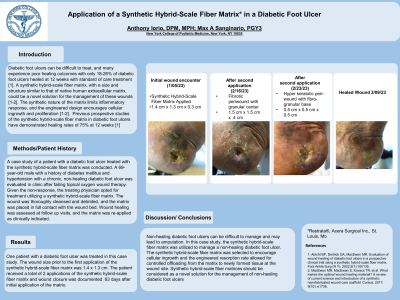
Methods: A case study of a patient with a diabetic foot ulcer treated with the synthetic hybrid-scale fiber matrix was conducted. A 69-year-old male with a history of diabetes mellitus and hypertension with a chronic, non-healing diabetic foot ulcer was evaluated in clinic after failing topical oxygen wound therapy. Given the non-response, the treating physician opted for treatment utilizing a synthetic hybrid-scale fiber matrix. The wound was thoroughly cleansed and debrided, and the matrix was placed in full contact with the wound bed. Wound healing was assessed at follow up visits, and the matrix was re-applied as clinically indicated.
Results: One patient with a diabetic foot ulcer was treated in this case study. The wound size prior to the first application of the synthetic hybrid-scale fiber matrix was 1.4 x 1.3 cm. The patient received a total of ____ applications of the synthetic hybrid-scale fiber matrix and wound closure was documented ______ days after initial application of the matrix.
Discussion: Non-healing diabetic foot ulcers can be difficult to manage and may lead to amputation. In this case study, the synthetic hybrid-scale fiber matrix was utilized to manage a non-healing diabetic foot ulcer. The synthetic hybrid-scale fiber matrix was selected to encourage cellular ingrowth and the engineered resorption rate allowed for controlled offloading from the matrix to newly formed tissue at the wound site. Synthetic hybrid-scale fiber matrices should be considered as a novel solution for the management of non-healing diabetic foot ulcers.

.png)