(CS-065) Coverage of desquamated skin with alloplastic synthetic skin substitute in adult patients with Toxic Epidermal Necrolysis Syndrome: a case series
Friday, April 28, 2023
7:15 PM - 8:30 PM East Coast USA Time
Rabia Nizamani, MD – Assistant Professor, UNC Dept Surgery, NC Jaycee Burn Center; Felicia Williams, MD – Associate Director, NC Jaycee Burn Center, UNC Burn Center
Introduction: Stevens-Johnson syndrome (SJS) and toxic epidermal necrolysis (TEN) are autoimmune reactions to drugs or infections which can involve the skin and mucous membranes. These conditions can lead to severe desquamation which can act as a portal for fluid loss, heat loss and infection. Attempts have been made to temporarily cover these areas with skin substitutes but the efficacy of this practice remains unproven. We describe the use of alloplastic synthetic skin substitute for temporary coverage in patients with toxic epidermal necrolysis.
Methods: This study is a case series that examines the use of alloplastic synthetic skin substitute in patients with TENS. Our institutional burn database was queried for all patients with the diagnosis of SJS or TENS who were admitted between November 2016 to November 2021. Only those cases in which there were definitive pathologic evidence of SJS and/ or TENS was used for this analysis. We further queried this group for patients who were treated with alloplastic synthetic skin substitute. Age, percent total body surface area open wound (%tbsa), mortality, ICU length of stay (ICU LOS), hospital length of stay (hosp LOS) and SCORTEN score were recorded. Also recorded was whether case was performed at bedside or in the operating room.
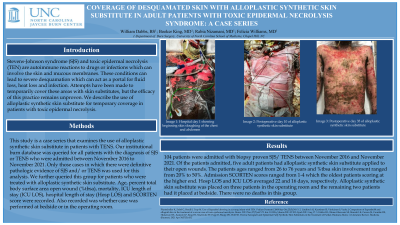
Results: 104 patients were admitted with biopsy proven SJS/ TENS between November 2016 and November 2021. Of the patients admitted, five adult patients had alloplastic synthetic skin substitute applied to their open wounds. The patients ages ranged from 26 to 76 years and %tbsa skin involvement ranged from 20% to 50%. Admission SCORTEN scores ranged from 1-4 which the oldest patients scoring at the higher end. Hosp LOS and ICU LOS averaged 22 and 16 days, respectively. Alloplastic synthetic skin substitute was placed on three patients in the operating room and the remaining two patients had it placed at bedside. There were no deaths in this group.
Discussion: This case series demonstrates the utility of alloplastic synthetic skin substitute for the treatment of patients with TENS. The operating room may be the best environment to apply this synthetic skin substitute unless the patient is intubated and able to tolerate a moderate analgesia and sedation regimen. Next, we intend to compare outcomes of patients with similar characteristics that did not receive alloplastic synthetic skin substitute.

.png)