(CS-085) Use of a Biofilm Dispersing Wound Gel as intervention in chronic wounds
Friday, April 28, 2023
7:15 PM - 8:30 PM East Coast USA Time
Kayla Frost, PhD – Nextscience
Introduction: 70-80% of chronic wounds have a tenacious biofilm resulting in stagnant progress to closure. Biofilms cause a chronic inflammatory environment also potentially results in peri-wound dermal lymphatic stasis, resulting in suppressed local immune function. Disruption of biofilms requires breakdown and/or removal of the polymeric sugars, cellular debris (including host and microbial DNA), and the extracellular polymeric substances (EPS). Incomplete management of these biofilm characteristics contributes to incomplete biofilm therapy.
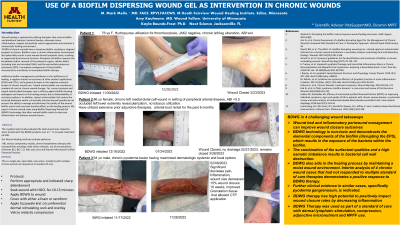
Ineffective biofilm management contributes to inefficiency of healing, a negative impact upon outcomes of other product applications (ECMs and CTPs) and a general increase in the negative economic burden of chronic wound care. Topical antimicrobials are considered a standard of care for chronic wound therapy, yet current systemic and topical antimicrobials therapies vary in efficacy against biofilm-forming pathogens and impact on the healing process due to bioavailability or resistance patterns. Topical antimicrobials that reduce the bacterial bioburden within a chronically infected wound typically do not possess the ability to manage and eliminate the totality of the wound biofilm matrix and may have harmful effects on the healing process. We report 3 chronic wound cases using Biofilm Dispersing Wound Gel (BDWG) technology that alters wound biofilm matrix to decrease inflammation and advance wound closure.
Methods: Retrospective chart review.
Results: 4 patients with chronic wounds are presented. Patient 1 has pyoderma gangrenosum, patient 2 has non-reconstructable peripheral arterial disease, patient 3 has thrombocythemia (on hydroxyurea) and patient 4 has stage IV breast cancer with associated lymphedema. Interim analysis and wound data to be provided with regards to BDWG use within a standard of care.
Discussion: BDWG technology is non-toxic, deconstructs the elemental components of biofilm disrupting the EPS, resulting in exposure of the bacteria within the biofilm. The combination of surfactant qualities and a high osmotic imbalance results in bacterial cell wall destruction. BDWG also aids in the healing process by maintaining a moist wound environment. Interim analysis of 3 chronic wound cases that had not responded to multiple standard of care therapies demonstrates a positive response to BDWG therapy. Further clinical evidence in similar cases, specifically pyoderma gangrenosum, is indicated.

.png)