(CS-088) An innovative vibrational debridement tool to help improve the global wound care crisis/ wound hygiene by saving time, reducing cost, and increasing patient satisfaction.
Friday, April 28, 2023
7:15 PM - 8:30 PM East Coast USA Time
Wade Farrow, MD, CWSP, FACCWS
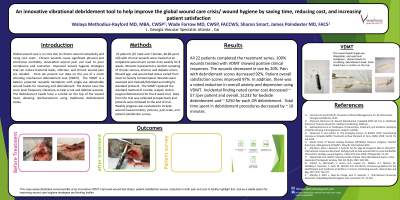
Introduction: Global wound care is in crisis due to chronic wound complexity and rising care costs. Chronic wounds cause significant physical and emotional morbidity. Associated wound pain can lead to poor compliance and outcomes. Improved wound hygiene strategies that can reduce bacterial loads, infection, and chronic wound pain are needed. Here we present our data on the use of a novel vibrating mechanical debridement tool (VMDT). The VDMT is a battery powered reusable handpiece with single-use detachable wound heads for cleansing and debridement. The device uses low sonic level frequency vibrations to help scrub and debride wounds. The debridement heads have a curette on the top of the wound head, allowing reimbursement using traditional debridement codes.
Methods: 22 patients (15 male and 7 female, 40-83 years old) with chronic wounds were treated at an outpatient wound care center once weekly for 8 weeks. Wounds represented a random sampling of chronic venous, arterial, and diabetic ulcers. Wound age, and wound bed status varied from clean to heavily contaminated. Wounds were assessed and cleaned/debrided according to standard protocol. The VDMT replaced the standard method of curette, scalpel, and/or surgical debridement for the 8-week trial. Data from the trial was collected prospectively and patients were followed to the end of trial. Weekly progress was evaluated to include wound measurements, pictures, pain scale, and patient satisfaction survey.
Results: All 22 patients completed the treatment series. 100% wounds treated with VDMT showed positive clinical responses. The wounds decreased in size by 20%. Pain with debridement scores decreased 92%. Patient overall satisfaction scores improved 97%. In addition, there was a noted reduction in overall anxiety and depression using VDMT. Incidental finding noted center cost decreased ~ $7 /per patient and overall, $1232 for bedside debridement and ~ $250 for each OR debridement. Total time spent in debridement procedures decreased by ~ 10 minutes.
Discussion: This case series illustrates some benefits of an innovative VDMT. Improved wound bed status, patient satisfaction scores, reduction in both pain and cost to facility highlight this tool as a viable option for improving wound care hygiene strategies and limiting biofilm

.png)