(CS-094) Negative Pressure Wound Therapy with Instillation and Dwell Utilizing a Novel Hybrid Silicone Acrylic Drape Dressing: A Case Series
Friday, April 28, 2023
7:15 PM - 8:30 PM East Coast USA Time
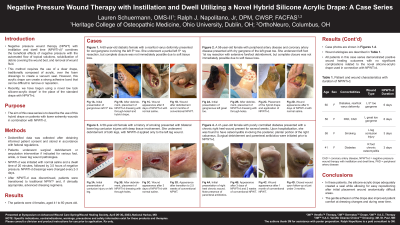
Introduction: Negative pressure wound therapy (NPWT) with instillation and dwell time (NPWTi-d) combines the beneficial effects of negative pressure with the automated flow of topical solutions, solubilization of debris covering the wound bed, and removal of excess fluid. This method requires the use of a clear drape, traditionally composed of acrylic, over the foam dressings to create a vacuum seal. However, this acrylic drape can create a strong adhesive bond that can be difficult to remove or reposition. Recently, we have begun using a novel low tack silicone-acrylic drape§ in the place of the standard drape with NPWTI-d. The aim of this case series is to describe the use of this hybrid drape on patients with lower extremity wounds in combination with this specific wound therapy technique.
Methods: Deidentified data was collected after obtaining informed patient consent and stored in accordance with federal regulations. Patients underwent surgical debridement or amputation intervention if indicated for various foot, ankle, or lower leg wound pathologies followed by NPWTi-d* with normal saline and a dwell time of 20 minutes, followed by 3.5 hours of negative pressure. NPWTi-d dressings were changed every 2-3 days. After NPWTi-d was discontinued, patients were transitioned to traditional NWPT and, if clinically appropriate, advanced dressing regimens.
Results: The patients were 2 males and 3 females, aged 42 to 61 years old. Wound etiologies included trauma, diabetic foot pathology, lower extremity gangrene, and delayed surgical wound healing. All patients in this case series demonstrated positive wound healing outcomes with no significant complications related to the novel silicone-acrylic drape used in connection with NPWTi-d therapy.
Discussion: In these patients, the silicone-acrylic drape adequately created a seal while allowing for easy repositioning after initial placement around anatomically difficult areas. The gentle adhesion of the drape also improved patient comfort at dressing changes and during wear time.

.png)