(CS-103) The Efficacy of Silicone-Based Gel on Chronic Non-Healing Diabetic Foot Wounds
Friday, April 28, 2023
7:15 PM - 8:30 PM East Coast USA Time
Russell Caprioli, DPM – Attending Podiatrist, Surgery, Podiatry Section, Northwell Health; Joseph Abdelmalak, DPM – Resident Podiatrist, Surgery, Podiatry Section, Northwell Health; Amit Rao, M.D. – Project Manager, Surgery, Northwell Health; Sally Kaplan, R.N. – Research Nurse, Surgery, Northwell Health
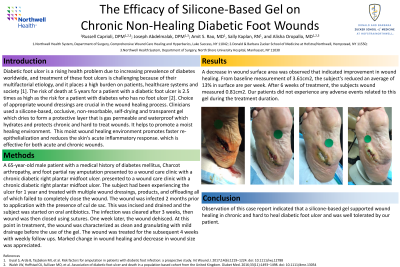
Introduction: Diabetic foot ulcer (DFU) is a rising health problem due to increasing prevalence of diabetes worldwide, and treatment of these foot ulcers is challenging because of their multifactorial etiology, and it places a high burden on patients, healthcare systems and society [1]. The risk of death at 5 years for a patient with a DFU is 2.5 times as high as the risk for a patient with diabetes who has no foot ulcer [2]. Choice of appropriate wound dressings are crucial in the wound healing process. Clinicians used a silicone-based, occlusive, non-resorbable, self-drying and transparent gel which dries to form a protective layer that is gas permeable and waterproof which hydrates and protects chronic and hard to treat wounds. This moist wound healing environment promotes faster re-epithelialization and reduces the skin's acute inflammatory response. which is effective for both acute and chronic wounds.
Methods: A 65-year-old male patient with a medical history of diabetes mellitus, Charcot arthropathy, and foot partial ray amputation presented to a wound care clinic with a chronic diabetic right plantar midfoot ulcer. The subject had been experiencing the ulcer for 1 year and treated with multiple wound dressings, products, and offloading all of which failed to completely close the wound. The wound was infected 2 months prior to application with the presence of cul de sac. This was incised and drained and the subject was started on oral antibiotics. The infection was cleared after 3 weeks, then wound was then closed using sutures. One week later, the wound dehisced. At this point in treatment, the wound was characterized as clean and granulating with mild drainage before the use of the gel. The wound was treated for the subsequent 4 weeks with weekly follow ups. Marked change in wound healing and decrease in wound size was appreciated.
Results: A decrease in wound surface area was observed that indicated improvement in wound healing. From baseline measurement of 3.61cm2, the subject’s reduced an average of 13% in surface are per week. After 6 weeks of treatment, the subjects wound measured 0.81cm2. Our patients did not experience any adverse events related to this gel during the treatment duration.
Discussion: Observation of this case report indicated that a silicone-based gel supported wound healing in chronic and hard to heal DFU and was well tolerated by our patient.

.png)