(CS-139) How Standardization with a pure Hypochlorous Acid (pHA) Based cleanser looks in real life
Friday, April 28, 2023
7:15 PM - 8:30 PM East Coast USA Time
Introduction: The use of a pHA based cleanser in wound bed preparation and biofilm/necrotic tissue removal is not well accepted despite emerging evidence based studies. In our institution, use of the pHA based cleanser started tentatively in the outpatient wound clinic. Remarkable clinical results there prompted use in the 150-bed inpatient hospital for all wound cleansing approximately 3 months post inpatient introduction. Prior to this, wounds were being cleansed with a variety of agents.
Methods: An average day in October 2022 was chosen to take a census of all inpatients with wounds that were being cleansed with the pHA cleanser. Each patient identified was followed through discharge. As a CWON, half a day a week is devoted to the outpatient wound clinic. The same data was collected on a single day in the clinic with weekly reassessment occurring for 30 days.
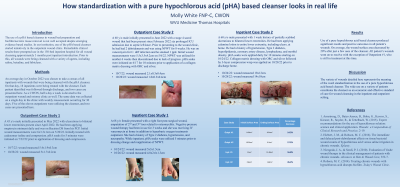
Results: On the average day in October that data was collected, review of the inpatient census showed that 18 patients were being treated with the pHA cleanser. The CWON was consulted and evaluated 11 of these patients. Details and outcomes of two of these patients are presented in detail. Five of the 11 patients seen in the outpatient wound clinic were utilizing the cleanser; two of these patients are presented in detail.
Discussion: The variety of wounds assessed and treated in the typical day the CWON practices, with duties spanning both inpatient and outpatient sites, represent the meaning of the word "standardization" in the use of an evidence-based cleanser. The wide use on a variety of patients and wound types represents the fact that the pHA based cleanser is an economic and effective standard of care for wound cleansing throughout the hospital whose single CWON provides care for patients that require specialized wound treatment.

.png)