(DLS-011(GR-009)) Limb Preservation of the Lower Extremity with Excision of the Achilles Tendon In a Diabetic Patient with Necrotizing Fasciitis
Friday, April 28, 2023
2:15 PM - 3:15 PM East Coast USA Time
Janie Staravecka, DPM; Michael Calderone, DPM, AACFAS, DABPM, CWSP
Introduction: Management of ulcerations with exposed tendons in the distal leg and foot are associated with significant morbidity and proximal amputation. Wound healing is impeded due to the tendons constant mobility and avascularity, resulting in difficulty with re-epithelization. There is little research pertaining to the treatment of these wounds. The case presented involves extensive soft tissue loss with exposed necrotic Achilles tendon resulting from necrotizing fasciitis, for which the patient was recommended a below knee amputation (BKA), prior to receiving treatment at the wound care center.
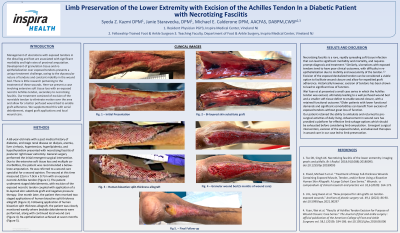
Methods: A 69-year-old male with a past medical history of end stage renal disease on dialysis, liver cirrhosis, hypertension, hyperlipidemia, diabetes, and hypothyroidism presented with a posterior right ankle ulceration with exposed, necrotic Achilles tendon. The ulceration measured 22cm x 7.0cm x 0.7cm. Following excision of the exposed tendon, application of bi-layered skin substitute and negative pressure therapy was performed. Patient then received multiple applications of human bioactive split thickness allograft, and local wound care, with re-epithelialization achieved at 7 months.
Results: The ulceration healed following excision of the tendon, serial debridement, and consistent local wound care. The patient also retained the ability to ambulate without the aid of durable medical equipment and retained functionality of his affected limb.
Discussion: Necrotizing fasciitis is a rare bacterial infection that can result in a significant amount of soft tissue loss and possible loss of life or limb. Treatment of ulcerations with exposed tendons additionally present difficulty in re-epithelialization due to mobility and avascularity of the tendon. Excision of the exposed tendon can be considered a viable option to facilitate wound closure and allow for expedited graft adherence, especially in patients with significant comorbidities and lower functional demands.

.png)