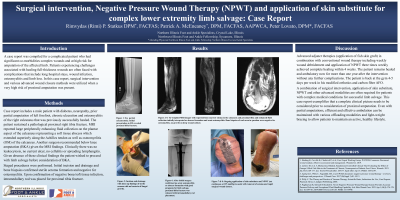
Introduction: A case report was compiled for a complicated patient who had significant co-morbidities, complex wounds and at high risk for amputation of the affected limb. Patients experiencing challenges associated with healing full-thickness wounds are often faced with complications that include long hospital stays, wound infection, osteomyelitis and limb loss. In this case report, surgical intervention and various advanced wound closure methods were utilized when a very high risk of proximal amputation was present.
Methods: Case report includes a male patient with diabetes, neuropathy, prior partial amputation of left forefoot, chronic ulceration and osteomyelitis of the right calcaneus that was previously successfully healed. The patient sustained a pathological proximal right tibia fracture. MRI reported large peripherally enhancing fluid collection on the plantar aspect of the calcaneus representing a soft tissue abscess which extended superiorly along the Achilles tendon as well as osteomyelitis (OM) of the calcaneus. Another surgeon recommended below knee amputation (BKA) given the MRI findings. Clinically there was no leukocytosis, current ulcer, cellulitis or spreading lymphangitis. Given absence of these clinical findings the patient wished to proceed with limb salvage before consideration of BKA.
Staged procedures were performed. Initial incision and drainage and bone biopsies confirmed sterile seroma formation and negative for osteomyelitis. Upon confirmation of negative bone/soft tissue infection, intramedullary rod was placed for proximal tibia fracture.
Results: Advanced adjunct therapies (application of fish skin graft) in combination with conventional wound therapy including weekly wound debridement and application of NPWT three times weekly achieved complete healing. The patient remains healed and ambulatory now for more than one year after the intervention without any further complications.
Discussion: A combination of surgical intervention, application of skin substitute, NPWT and other advanced modalities are often required for patients with complex medical conditions for successful limb salvage. This case report exemplifies that a complete clinical picture needs to be considered prior to consideration of proximal amputation.

.png)