(CS-118) Complicated Wounds Following Vascular Surgery: Is it Appropriate to Try and Save the Limb, or are efforts futile, and a Proximal Major Amputation Indicated?
Friday, April 28, 2023
7:15 PM - 8:30 PM East Coast USA Time
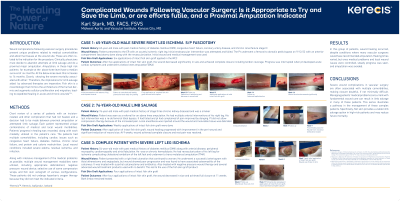
Introduction: Wound complications following vascular surgery procedures present unique problems related to medical comorbidities and abnormal tissues at the wound site. These are often related to the indication for the procedure. Clinically, physicians must decide to abandon attempts at limb salvage and do a proximal major amputation. Amputation, specifically transmetatarsal, is associated with a 36% three-year mortality rate1. Therefore, the implications for limb salvage and advanced therapies are imperative. Fish skin is a novel biologic that mimics the architecture of the human dermis and augments cellular proliferation and migration, leading to expedited healing in acute and chronic wounds2,3,4.
Methods: Chart review of a series of patients with an incision-related complication that had not healed, and a decision had to be made between proximal amputation or attempted limb salvage. Each patient represented unique combinations of medical and local wound morbidities. Patients' progress in healing was recorded, along with each modality utilized in the patient's care. The patients had multiple comorbidities, including cardiac issues such as congestive heart failure, diabetes mellitus, chronic renal failure, and protein and calorie malnutrition. Local wound conditions included severe edema, residual ischemia, and infection.
Along with intensive management of the medical problems as possible, multiple wound management modalities were utilized, including appropriate debridement, negative pressure wound device, selective use of some compression wraps, and fish skin xenograft of various configurations. These patients did not undergo hyperbaric oxygen therapy because they did not meet the indicated criteria.
Results: In this group of patients, wound healing occurred, despite conditions where many vascular surgeons would have recommended amputation. Healing times varied, but once medical problems and local wound issues were controlled, steady progress was seen, and amputation was avoided.
Discussion: Severe wound complications in vascular surgery are often associated with multiple comorbidities, making closure doubtful, if not minimally difficult. Managing patients' medical problems concurrent with fundamental wound care can result in limb salvage in many of these patients. This series illustrates a pathway in the management of these complex patients. Specifically, fish skin provides a viable limb salvage option in high-risk patients and may reduce future mortality.

.png)