(CS-132) Utilization of a Short Term Negative Pressure Wound Therapy (NPWT) System To Enhance Rapid Wound Reduction in Hard-To-Heal DFU's
Friday, April 28, 2023
7:15 PM - 8:30 PM East Coast USA Time
Danny Ghannoum, DPM – Resident PGY-1, Podiatric Surgery & Wound Healing, Saint Vincent Hospital
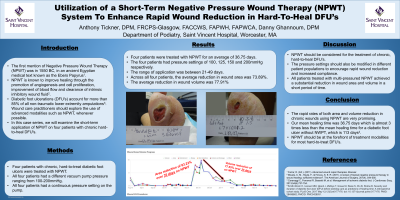
Introduction: The first mention of Negative Pressure Wound Therapy (NPWT) was in 1550 BC, in an ancient Egyptian medical text known as the Ebers Papyrus1. NPWT is known to improve healing through the promotion of angiogenesis and cell proliferation, improvement of blood flow and clearance of intrinsic inhibitory wound fluid2. Diabetic foot ulcerations (DFU's) account for more than 85% of all non-traumatic lower extremity amputations3. It therefore behooves wound care practitioners to use advanced modalities, such as NPWT, whenever possible. In this case series, we will examine the short-term application of NPWT on four patients with chronic hard-to-heal DFU's.
Methods: Four patients with chronic DFU's were treated with NPWT. All four patients had a different vacuum pump pressure ranging from 100-200mmHg. All patients had a continuous pressure setting on the pump.
Results: Four patients were treated with NPWT for an average of 36.75 days. The four patients had pressure settings of 100, 125, 150 and 200mmHg respectively. The range of application was between 21-49 days. Across all four patients, the average reduction in wound area was 73.89%. The average reduction in wound volume was 77.91%
Discussion: NPWT should be considered for the treatment of chronic, hard-to-heal DFU's. The pressure settings should also be modified in different patient populations to encourage rapid wound reduction and increased compliance. All of the patients treated with multi-pressured NPWT achieved a substantial reduction in wound area and volume in a short period of time.

.png)