(CS-063) Treatment of Calciphylaxis Ulceration with Ovine Forestomach Matrix
Friday, April 28, 2023
7:15 PM - 8:30 PM East Coast USA Time
Brandon Bosque, DPM – Senior Medical Advisor, Medical Affairs, Aroa Biosurgery
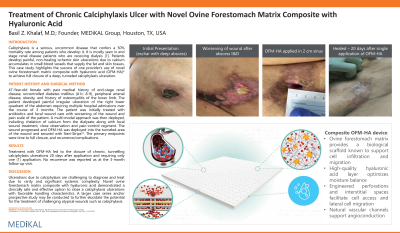
Introduction: Calciphylaxis is a serious, uncommon disease that confers a 50% mortality rate among patients who develop it. It is mostly seen in end stage renal decease patients who are receiving dialysis. Patients develop painful, non-healing ischemic skin ulcerations due to calcium accumulates in small blood vessels that supply the fat and skin tissues. This case study highlights the success of one provider's use of ovine forestomach matrix composite with hyaluronic acid (OFM-HA) to achieve full closure of a deep, tunneled calciphylaxis ulceration.
Methods: This case study is a 47-year-old female with past medical history of end-stage renal disease, uncontrolled diabetes mellitus (A1c: 8-9), peripheral arterial disease, obesity, and history of osteomyelitis of the lower limb. The patient developed painful irregular ulceration of the right lower quadrant of the abdomen requiring multiple hospital admissions over the course of 3 months. She was initially treated with antibiotics and local wound care with worsening of the wound and pain scale of the patient. A multimodal approach was then deployed, including chelation of calcium from the dialysate along with local wound treatment, close observation and pain regiment. The wound progressed and OFM-HA* was deployed into the tunneled area of the wound and secured with steri strips. The primary endpoints were pain score, time to full closure, and recurrence/complications.
Results: Treatment with OFM-HA led to the closure of chronic, tunnelling calciphylaxis ulcerations 20 days after application and requiring only one (1) application. No recurrence as of 3 months.
Discussion: Ulcerations due to calciphylaxis are challenging to diagnose and treat due to rarity and significant systemic complexity. Novel ovine forestomach matrix composite with hyaluronic acid demonstrated a clinically safe and effective option to close a calciphylaxis ulcerations with favorable handling characteristics. A larger case series and/or prospective study may be conducted to further elucidate the potential for the treatment of challenging atypical wounds such as calciphylaxis.

.png)