(CS-130) UBM Extracellular Matrix for the Closure of Enteroatmospheric Fistulae Wounds
Friday, April 28, 2023
7:15 PM - 8:30 PM East Coast USA Time
Introduction: Clinical Problem: There are few available treatments for Enteroatmospheric Fistula wounds and most techniques focus on topical management.
Methods:
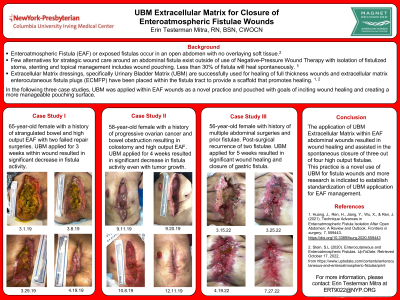
Background: Enteroatmospheric Fistula (EAF) or exposed fistulas occur in an open abdomen with no overlaying soft tissue. Few alternatives for strategic wound care around an abdominal fistula exist outside of use of Negative-Pressure Wound Therapy with isolation of fistulized stoma, stenting and topical management includes wound pouching. Less than 30% of fistula will heal spontaneously. Extracellular Matrix dressings, specifically Urinary Bladder Matrix (UBM) are successfully used for healing of full thickness wounds and extracellular matrix enterocutaneous fistula plugs (ECMFP) have been placed within the fistula tract to provide a scaffold that promotes healing. In the following three case studies, UBM was applied within EAF wounds as a novel practice and pouched with the goal of inciting wound healing and creating a more manageable pouching surface
Results: Case Study I: UBM applied for 3 weeks within wound resulted in significant decrease in fistula activity.
Case Study II: UBM applied for 4 weeks resulted in significant decrease in fistula activity even with tumor growth.
Case Study II: UBM applied for 5 weeks resulted in significant wound healing and closure of gastric fistula.
Discussion:
Conclusion: The application of UBM Extracellular Matrix within EAF abdominal wounds resulted in wound healing and assisted in the spontaneous closure of three out of four high output fistulae. This practice is a novel use of UBM for fistula wounds and more research is indicated to establish standardization of UBM application for EAF management.

.png)